


August Hatch Guide: Everything You Need to Know About Colorado’s Hatches in August
August is one of the most underrated months to fly fish in Colorado. While many anglers assume the best insect activity ends with the famous June salmonflies or July PMDs, experienced guides know that August consistently produces some of the year’s most technical and rewarding dry fly fishing. As well as one of the best months to target big trout during the crawfish molt.
The rivers around Vail, Glenwood Springs and Aspen, as well as the Upper Colorado River continue to fish exceptionally well throughout August. Even during years with below-average snowpack and lower-than-normal flows like this year, aquatic insects have continued to hatch on schedule. Trout have evolved over thousands of years to key in on these seasonal food sources, and fortunately for anglers, August still provides a buffet of insects from sunrise until dark.
At Colorado River Outfitters, August is one of our favorite months to guide. The crowds begin to thin with kids heading back to school, trout have settled into predictable summer feeding patterns, and anglers can experience everything from delicate Trico spinner falls to explosive hopper eats against grassy banks.
Let’s dive into every major hatch you should expect this month.
Why August Can Be Outstanding Fly Fishing
Every summer people become concerned when rivers begin dropping. While water levels certainly affect where trout position themselves, they do not automatically mean poor fishing.
In fact, lower, stable water often creates incredibly consistent insect activity.
August typically offers:
Predictable feeding windows
Clear water
Excellent visibility
Active dry fly fishing
Reliable nymphing
Fantastic terrestrial fishing
Less fishing pressure than early summer
As always, anglers should carry a thermometer and monitor water temperatures throughout the day. Fish early, land trout quickly, minimize handling, and discontinue fishing once water temperatures approach 68°F.
Fortunately, much of Colorado’s higher elevation water, including sections of the Eagle River, Roaring Fork River, and Upper Colorado River, have continued producing excellent fishing during morning hours.

Midges: Colorado’s Most Important Year-Round Hatch
Although most anglers associate midges with winter, they remain one of the single most important food sources throughout August.
Identification:
Midges resemble tiny mosquitoes but never bite.
Characteristics include:
Slender bodies
Two wings
Long legs
Sizes 18-24
Black
Gray
Olive
Brown
Cream

The pupae are often even more important than the adults. Because they hatch virtually every day of the year, trout rarely ignore them. They become especially important during slower fishing periods between larger hatches.
Techniques
Dry Fly
During calm mornings you’ll often see trout gently sipping emerging adults.
Fish:
Griffith’s Gnat
CDC Midge
Parachute Midge
Small Cluster Midges
Long leaders (9-12 feet) and fine tippet (5X) are often necessary.
Nymphing
Midge pupae consistently catch fish all year.
Fish them beneath:
Small mayflies
Caddis larvae
Cranefly larvae
Use:
Zebra Midges
Top Secret Midges
Hilbert’s Daysaver Midges
Mercury Midges
Keep them near the bottom with a tungsten bead point fly.

Tricos: Tiny Bugs, Giant Opportunities
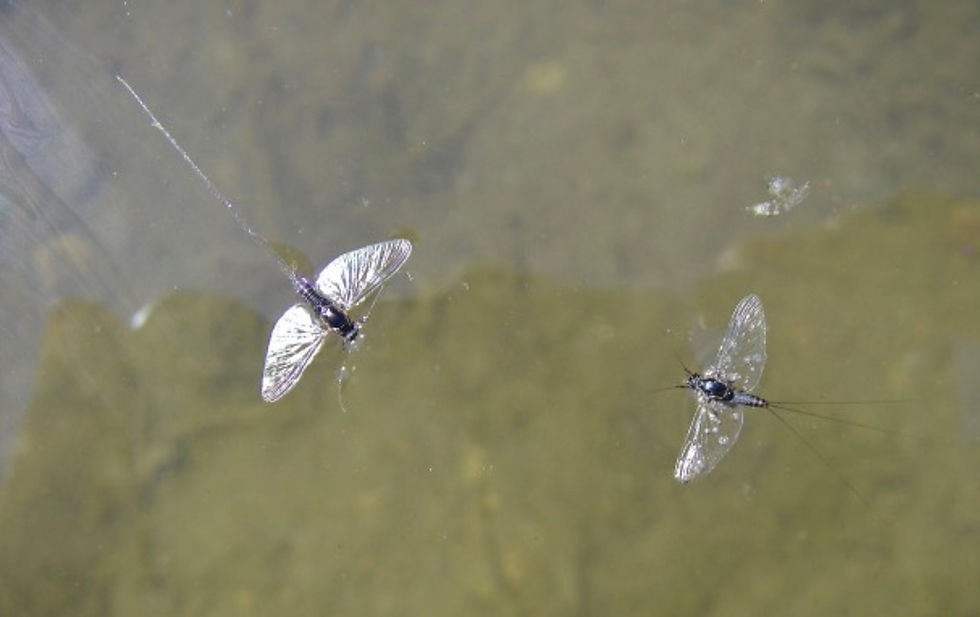
If there’s one hatch serious anglers look forward to every August, it’s the Trico. This tiny mayfly creates some of the most technical and exciting dry fly fishing Colorado has to offer.
Identification
Adult males:
All black bodies
Clear/gray wings
Adult females:
Black thorax
Light yellow abdomen
Clear/gray wings
Sizes: 20-26
When They Hatch
Tricos usually emerge before sunrise. The famous spinner fall generally occurs:
8:00-10:30 AM
Weather dependent.
Warm mornings often speed things up.
Trout Behavior
Fish often become incredibly selective.
Instead of explosive rises, watch for:
Nose tips
Tiny dimples
Slow sipping rises
These fish may reject dozens of flies before committing.
Best Techniques
Accuracy matters more than distance.
Use:
12-15 foot leaders
5X or 6X tippet
Reach casts
Slack presentations
Recommended flies:
Trico Spinner
CDC Trico
Parachute Trico
Hi-Vis Trico
Be incredibly observant of the naturals. If most of the insects you’re seeing have an upright wing, fish a parachute style imitation. If most of the insects in the surface have spent wings (splayed out to the side) then fish a spinner imitation.
After the hatch, trout will continue to feed on drowned adults that get swept under water in rapids. Fishing a drowned trico imitation on a nymph rig can be deadly.

Caddis: Colorado’s Surface Superstar
If Tricos dominate the morning, caddis often steal the evening. Although we haven’t been able to take advantage of evening caddis hatches on most of our waters this summer due to higher than normal water temps, it’s important to keep this information in your back pocket for when things hopefully cool down at the end of the month.
Identification
Adults resemble tiny moths.
Notice:
Tent-shaped wings
Long antennae
Rapid flight
Skittering movement on water surface
Most common colors:
Tan
Olive
Gray
Brown
Typical sizes:
14-18
Larvae remain bright green, olive, tan, or cream. Pupae develop darker wing cases just before emerging.
Hatch Timing
Caddis often hatch in the late afternoon and evening and do most of their mating activity throughout the night. In the mornings, trout are used to seeing spent caddis in the surface and will opportunistically eat them.
Trout Feeding Behavior
Our guides have been having success on the Colorado River, Eagle River and Roaring Fork River fishing spent caddis dry flies early morning until the sun hits the water. Trout are opportunistically rising with aggressive eats in shallow flats and riffles. Galloup’s “Butch Caddis” is a CRO guide favorite. It’s wide wing profile imitated a spent caddis perfectly.

Best Dry Fly Techniques
Don’t dead drift every fly.
Sometimes adding subtle movement dramatically increases strikes.
Try:
Twitching
Skating
Short strips
Swinging across current
Effective flies include:
Elk Hair Caddis
X-Caddis
CDC Caddis
Iris Caddis
Missing Link
Nymphing
The sun hits the water, fish a caddis larvae under a hopper with a small midge below.

Learn to tie this fly here!

Terrestrials: The August Main Course
Few things excite anglers more than watching a large trout crush a hopper. August is prime terrestrial season. Grasshoppers, ants, beetles, and other land insects become an enormous part of a trout’s diet.
Why They’re So Important
By August:
Grasses are mature.
Meadows are dry.
Afternoon winds increase.
Insects regularly fall into rivers.
July’s massive variety of hatches dwindle
Trout quickly learn these opportunistic meals provide huge calories for very little effort.

Hopper patterns come in several different styles, many feature brightly colored legs and foam bodies. The “Yeti Hopper” is a CRO guide favorite.
Best Water
Target:
Undercut banks
Grass edges
Cutbanks
Log jams
Boulder banks
Anywhere vegetation hangs over the water

Fishing Strategy
Fish your hopper as a single dry or as part of a hopper dropper rig. If fishing a single hopper, target your cast as close to the bank as possible. Overhanging brush, cut banks, rocky structure, log jams are prime areas to fish a single hopper. Sometimes getting 6” closer to the bank can be the difference between getting an eat and a trout just letting it float by.
If fishing a hopper dropper setup, you won’t be able to target as tight to the bank due to risking snagging your nymphs. Instead, target water 1’-3’ in depth and cover both bases. Trout in this water will be looking to mostly feed on subsurface nymphs with the occasional trout coming up to opportunistically eat the hopper.

Flying Ants
There is something special about ants that trout simply love. No matter what, trout seem to simply not be able to refuse a flying ant struggling on the surface or drowned and drifting through the current. Ants play a key role in our guides arsenal in August, here’s what you need to know.
Identification
Colors:
Black
Cinnamon
Brown
Rust
Sizes:
14-20
A small ant behind a hopper can dramatically increase your success.
Favorite Patterns:
Parachute Ant
Galloup’s Ant Acid
Galloup’s Sunk Ant

Cranefly Larvae
Many anglers overlook craneflies, but trout certainly don’t. Large cranefly larvae make excellent attractor nymphs and become an important food source after summer rain events or rise in flows. Brian Hilbert’s Philly Cheese Cranefly is a staple in our rivers and is one of those flies trout seem to always opportunistically eat when nothing else seems to be happening.

The August Crawfish Molt: Colorado River’s Secret to Trophy Trout
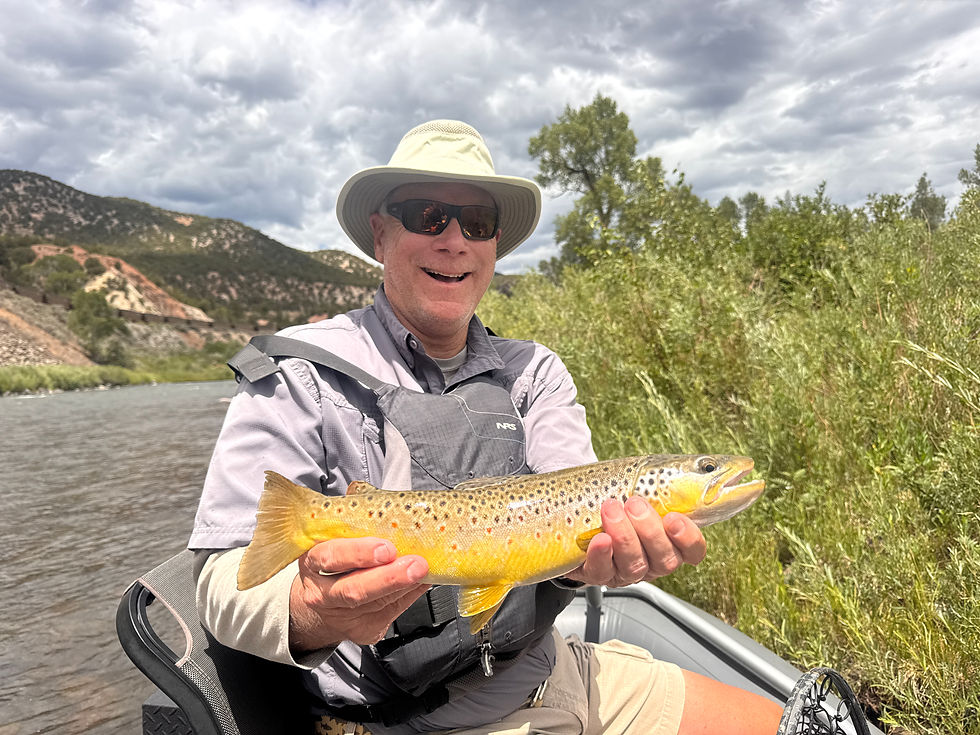
While much of the Colorado River is currently under warm-water fishing restrictions, this is a pattern every angler should keep in mind as water temperatures cool later in August and into September. Once conditions are safe to fish again, the annual crawfish molt can provide one of the best opportunities of the year to target truly trophy-sized brown trout.
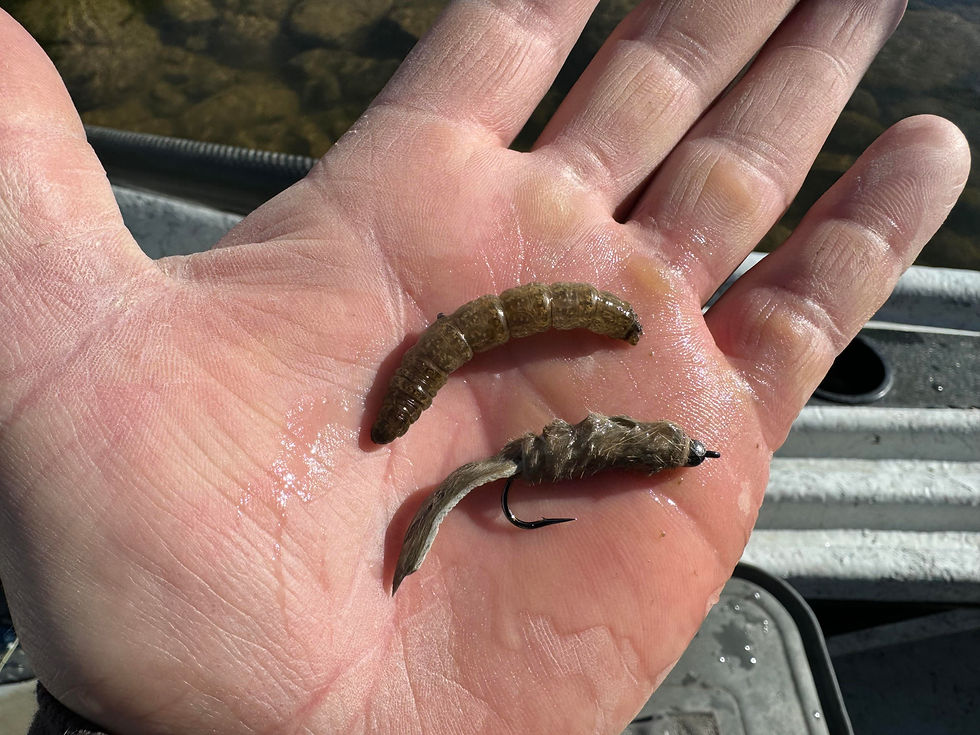
The Colorado River is loaded with crawfish, and every August thousands of them begin molting. During this process, they shed their hard exoskeleton, leaving them with a soft shell that offers very little protection. These freshly molted crawfish become an easy, protein-rich meal, and large brown trout quickly learn to take advantage of the buffet.
Colorado River Outfitters co-owner and veteran guide Brian Hilbert has spent years refining techniques around this overlooked hatch. Rather than viewing crawfish as an occasional food source, Brian targets the specific molting window when big browns become heavily keyed in on them. It’s a short-lived opportunity, but one that consistently produces some of the largest trout of the season.

To imitate this natural event, Brian designed “Hilbert’s Mud Hustler”, a highly realistic crawfish pattern that will soon be available through Montana Fly Company. Unlike many traditional crawfish flies, the Mud Hustler is intended to be fished without added weight, allowing it to behave much more like a vulnerable, naturally drifting crawfish. Tying video for the Mud Hustler is coming this week! Stay tuned!

CRO’s Preferred Crawfish Technique
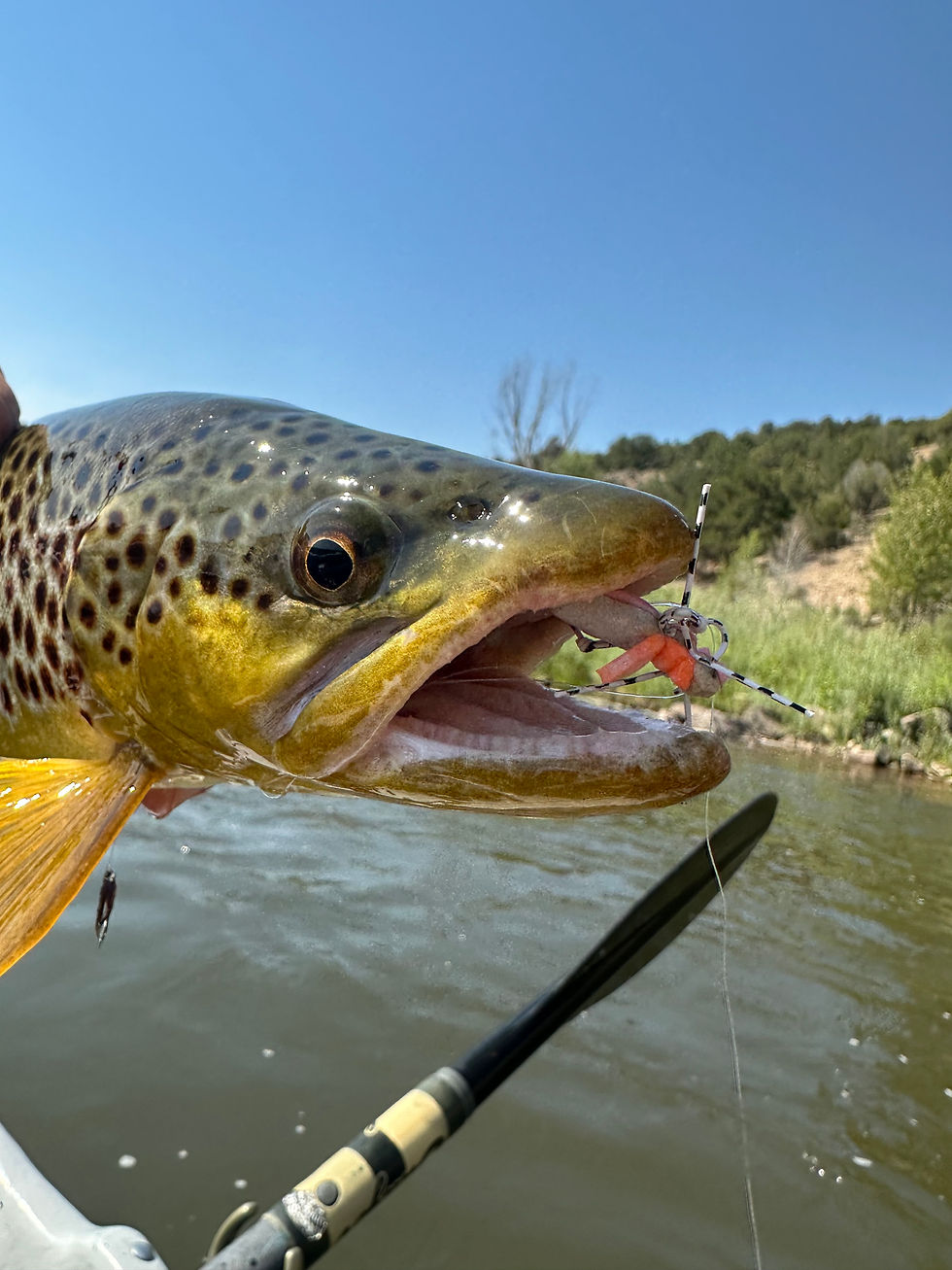
Brian’s favorite presentation is surprisingly simple but incredibly effective. Suspend an unweighted Mud Hustler approximately three feet below a large hopper using the hopper as both an indicator and an attractor. Cast the rig tight against rocky banks, ledges, boulders, undercut structure, and shoreline transitions where mature brown trout spend much of their time. Other effective patterns are “zirdle bugs” and “clouser cray”.

The unweight crawfish drifts naturally through the water column. Instead of crashing to the bottom like a heavily weighted fly, it glides and tumbles alongside rocks exactly as a freshly molted crawfish would. This subtle presentation often triggers violent strikes from brown trout lying in ambush along the bank.
The hopper serves two important purposes. First, it suspends the crawfish and acts as an easy-to-see strike indicator. Second, it remains a legitimate meal itself. During August, trout are simultaneously feeding on terrestrial insects, making double eats on both the hopper and the crawfish surprisingly common.
If you’re specifically hunting trophy browns, don’t overlook this pattern once water temperatures return to safe fishing conditions. The crawfish molt is one of the Colorado River’s most overlooked seasonal feeding events, yet it consistently produces some of the biggest fish Colorado River Outfitters catches each year. For anglers willing to fish tight to structure and trust the slow, natural drift of an unweighted crawfish, the rewards can be extraordinary.
August Nymphing Strategy
While dry fly fishing steals the spotlight, don’t ignore subsurface presentations. Many of the biggest trout continue feeding beneath the surface.
Effective combinations include:
Hopper + caddis larva + midge
Hopper + cranefly larvae + drowned trico
Hopper + crawfish
Focus on:
Riffle drop-offs
Boulder gardens
Bucket water
Soft seams
Tailouts
As water drops, accuracy becomes increasingly important.
Reading the Water in August
Lower water concentrates trout into predictable holding water.
Focus on:
Oxygen-rich riffles
Pocket water
Shade
Undercut banks
Deep slots
Faster current with nearby depth
Early mornings often produce the coolest water temperatures and the most active fish.
Colorado River Outfitters’ August Fly Recommendations
Some of our guides’ favorite August flies include:
Dry Flies
Trico Spinner
Griffith’s Gnat
Elk Hair Caddis
X-Caddis
Butch Caddis
Chubby Chernobyl
Yeti Hopper
Flying Ant
Nymphs
Hilbert’s Daysaver Midge size 20-22
Hilbert’s Sexi Caddis Larvae size 16-18
Hilbert’s Sexi Caddis Pupa size 16-18
Hilbert’s Sexi Top May size 20-22
RS2 size 20-22
Zebra Midge size 22
Perdigon size 16-18
Soft Hackle Emerger size 16
Hilbert’s Philly Cheese Cranefly size 6
Hilbert’s Mud Hustler

Experience August with Colorado River Outfitters
August consistently offers some of the most enjoyable fly fishing of the entire season. From delicate Trico spinner falls in the morning to explosive hopper eats in the afternoon and caddis-filled evenings, every day on the river presents something different.
Whether you’re a first-time angler looking to catch your first trout on a fly rod or an experienced fly fisher hoping to refine your dry fly presentations, our guides spend hundreds of days each year on Colorado’s rivers. We closely monitor water temperatures, insect activity, river conditions, and daily hatch timing so our guests are always fishing where conditions are best.
Colorado River Outfitters offers professionally guided float trips and walk-and-wade adventures on the Eagle River, Roaring Fork River, Colorado River, and Fryingpan River, serving anglers throughout Vail, Beaver Creek, Avon, Edwards, Eagle, Glenwood Springs, Aspen, Basalt, and Carbondale.
If you’re planning a Colorado fly fishing trip this August, there’s no better time to experience some of the year’s most consistent dry fly action. Let our experienced guides put you on fish, teach you the finer details of matching the hatch, and help you make the most of one of Colorado’s best months on the water.
Book your August fly fishing adventure with Colorado River Outfitters today and discover why August has become one of our favorite months of the year. Call or text 970-236-1937


Comments