


Upper Colorado River Fishing Report – August Dry Fly Magic with CRO Guide Paul Killino
- flyfish19
- Aug 12, 2025
- 3 min read

If you’ve been waiting for that perfect window to fish dry flies on the Upper Colorado, now’s the time to go. CRO guide Paul Killino has been on the water every day this week and reports some of the best topwater action we’ve seen all summer.
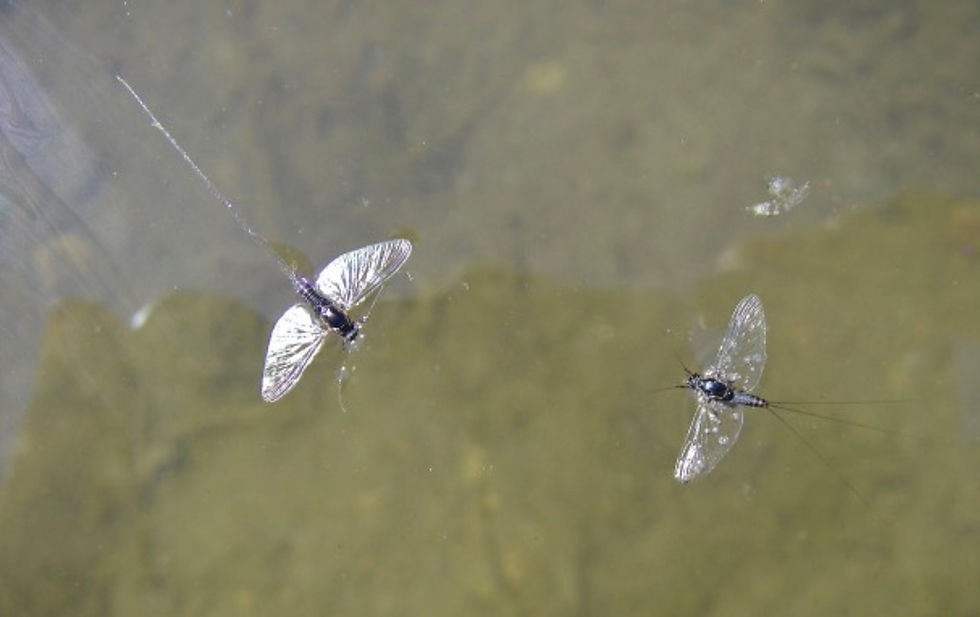
Right now, the Upper C is alive with consistent midge and mayfly hatches, bringing fish to the surface with confidence. The mornings have started off cool and quiet, but by 10:30 a.m., the river starts to wake up. And come 11:00 a.m.—boom! The surface lights up.
Paul recommends keeping it small but simple. Here’s what’s working:

Size 18 Griffith’s Gnat
Imitates: Clustered midges
When & Where:
Start prospecting with this fly as early as 9:30–10 a.m. in slower moving water — inside seams, tailouts, and soft eddies.
How to Fish It:
Fish it dead drift with minimal drag.
Use a long 5X or 6X leader (12-14 feet) to keep your presentation delicate.
Add a tiny amount of floatant to just the hackle — not the entire fly — to keep it sitting low in the film.
Look for sippers gently rising in rhythm, and time your cast to the feed.
Foam eddies are a must target area!

Pro tip: If you see fish refusing your fly last-second, clip a few hackle fibers off the bottom of the Griffith’s Gnat to make it sit flush with the surface — this often seals the deal.

Size 20 Trico Spinner
Imitates: Female trico spinner fall
When & Where:
These hatches are thick early morning to mid morning, with fish dialed in on spent spinners around 9:00 a.m. Focus on flat water with multiple rising fish.
How to Fish It:
Use a downstream reach cast to avoid lining the fish.
Drift it dead still — no twitching. Trico spinners are spent and motionless on the water.
Run this fly on a 5X tippet, sometimes even 6X if the water is ultra-clear.
Watch for nose pokes and slow sips — set gently and be patient.

Pro tip: Use a small, lightly greased yarn or white post parachute fly about 12” up the tippet as a sight indicator — Trico spinners are nearly invisible on the surface. This will make it easier to find your fly.

Size 20 Galloups Dolly Wing PMD Spinner
Imitates: Pale Morning Dun spinners after mating
When & Where:
These show up right alongside tricos, usually later in the hatch cycle. Fish may shift from tricos to PMDs once the light hits the water and the bugs begin to pile up in foam lines.
How to Fish It:
Target slower seams and back eddies where the current isn’t too pushy.
Fish it as a single dry or trail it behind a Griffith’s Gnat if you’re prospecting multiple rises.
Focus on fish that are feeding steadily — skipping risers are often chasing emergers instead.
Present the fly with absolute drag-free drift — slack line and reach cast techniques are key here.

Pro tip: Don’t be afraid to change flies often — if a fish refuses your trico three times, switch to the PMD spinner immediately and give them a different look.
Present these with a delicate drift in slower edges and foam lines, and you’re in for some serious dry fly eats. Fish are feeding eagerly, with pods sipping in rhythm—so this is a great time to get dialed in on your dry fly game.

The flows are ideal for walk-wading and float trips alike, and the clarity has been excellent. This is classic Upper C fishing at its best: technical, visual, and incredibly rewarding.
If you’re looking to sharpen your dry fly skills, or just want to have a blast watching wild trout eat on the surface, now is the time to book your trip. Paul and the rest of the CRO guide crew are ready to get you on fish and show you exactly what makes this stretch of river so special.
📞 Call us today to lock in your dates—August trips are filling fast! 970-236-1937
And don’t forget to follow along for daily river updates, fly recommendations, and fishy photos from the field on Instagram:
See you on the water!
— The Team at Colorado River Outfitters


Comments