


Winter Fly Fishing Tips with CRO Guide Brian Hilbert

Winter fly fishing can be some of the most rewarding trout fishing of the year—if you approach it with the right mindset and tactics. Fewer anglers, clear water, and predictable fish behavior all stack the odds in your favor. But winter trout are also cold, deliberate, and unforgiving of sloppy presentations.
After years of guiding through Colorado winters, CRO guide Brian Hilbert has refined a simple, highly effective approach to consistently put more trout in the net when water temps drop. Below are five proven winter fly fishing tips that Brian relies on day in and day out with his clients.

1. Work Water Thoroughly
In winter, trout don’t move far to eat. Their metabolism slows, and they conserve energy by holding in soft seams, deep buckets, and slow-moving runs. This means coverage matters more than distance.
How to Do It Right:
Fish methodically: Break each run into sections and fish it from multiple angles.
Make repeated drifts: Don’t assume a fish isn’t there after one pass. Winter fish often eat on the 3rd, 5th, or even 10th drift.
Adjust depth constantly: If you’re not ticking bottom occasionally, you’re likely too shallow.
Slow everything down: Longer drifts, less line movement, and controlled mends are key.
Guide Tip: Brian often tells clients, “If you think you’ve fished it enough—fish it three more times.” Winter trout reward patience.

2. Don’t Overvalue Tiny Bugs
Yes, midges dominate winter menus—but that doesn’t mean trout only eat microscopic flies. Opportunistic feeding is very real in cold water, and larger, high-calorie meals often win.
Big Flies That Excel in Winter:
Leeches
Cranefly larvae
Egg patterns
Worms
These flies stand out and offer trout more energy per bite, something they actively seek in winter.
When Big Flies Shine:
Slightly off-color water
Overcast days
Deep runs and tailouts
When pressured fish have seen endless size 22 midges
Guide Tip: Brian frequently rigs a large Philly Cheese Cranefly Larvae as the lead fly with a small midge behind it. The big fly gets attention; the small fly often gets eaten.

3. Prioritize Stealth
Winter water is typically low and clear, making trout incredibly aware of their surroundings. One careless move can shut down an entire run.
Stealth Essentials:
Avoid bright clothing (especially orange, red, or neon)
Move slowly and deliberately
Slide your feet instead of stepping
Fish from downstream whenever possible
Use smaller, more subtle indicators
Smaller indicators land softer, drift more naturally, and spook fewer fish. In many winter scenarios, downsizing your indicator can dramatically increase eats.
Guide Tip: Brian prefers micro foam indicators in winter. They’re sensitive, discreet, and deadly effective.

4. Practice Sight Fishing
Winter is one of the best times of year to sight fish—if you slow down enough to look.
Before you make a cast:
Stop.
Observe.
Scan seams, buckets, and soft edges.
Often, trout will reveal themselves through subtle movement, flashes, or shadows. Fishing to a known fish dramatically increases your odds.
How to Improve Winter Sight Fishing:
Wear quality polarized sunglasses
Position the sun at your back when possible
Kneel or crouch near the bank
Watch the water longer than feels necessary
Guide Tip: Brian encourages anglers to “Spend five minutes watching before making one cast.” Many winter fish are caught before the first drift even happens—simply because they were spotted first.
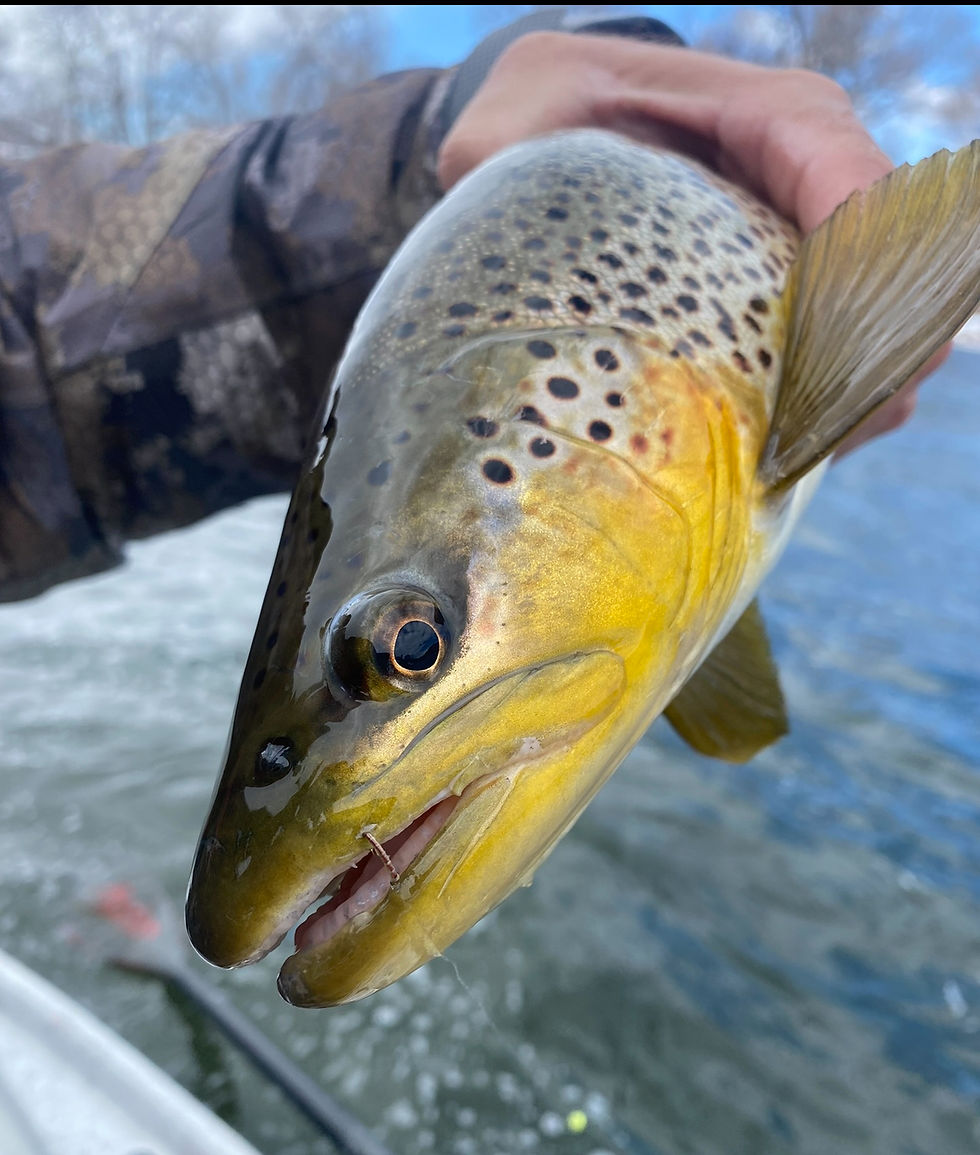
5. Simplify Your Fly Box
Winter is not the time to overcomplicate things. Trout are selective, yes—but their menu is limited. Confidence and presentation matter more than fly variety.
Winter Fly Box Essentials:
Midges in all stages (larva, pupa, adult)
Leeches
Egg patterns
Cranefly larvae
That’s it.
Instead of changing flies every few drifts:
Focus on depth
Improve your drift
Adjust weight before switching patterns
Guide Tip: Brian often fishes the same few flies all winter long. When clients struggle, it’s rarely the fly—it’s depth, speed, or stealth.

Final Thoughts
Winter fly fishing rewards anglers who slow down, simplify, and pay attention to detail. By working water thoroughly, embracing larger flies, prioritizing stealth, practicing sight fishing, and simplifying your fly box, you’ll dramatically increase your success during the coldest months.
These are the exact strategies CRO guide Brian Hilbert uses every winter to put clients on fish—even in the toughest conditions.
If you’re ready to experience just how good winter fishing can be, book a day on the water with CRO and learn these techniques firsthand. Prime winter days are limited, and the trout are waiting. 🎣


Comments