


The Starting Lineup — 3 Flies You MUST Have for the Month of May

May in Colorado is one of the most exciting and misunderstood months of the entire fly fishing season. The rivers are changing by the hour, flows are creeping upward, bugs are active, and trout are shifting their feeding behavior almost daily. For anglers willing to adapt, May can produce some of the best fishing of the year.
At CRO, guide Matt Fletcher spends countless days on the water during runoff season, dialing in what trout are actually eating as rivers begin to rise and color up. While many anglers think fishing shuts down during runoff, experienced guides know this is when smart fly selection and proper presentation become everything.
If you only carried a handful of flies during the month of May, these are the patterns Matt would never leave home without.

1. Pat’s Rubber Legs
Coffee/Black — Size 10-8
If May had an MVP fly pattern, the Pat’s Rubber Legs would probably win it every year.
As runoff begins, water levels rise and currents become stronger. That increased flow dislodges larger aquatic insects from the bottom, especially stonefly nymphs. Trout know this and start feeding aggressively on bigger meals that provide maximum calories with minimal effort.
The coffee/black variation is particularly deadly because it creates a dark, bold silhouette in stained water. During runoff conditions, visibility is everything. Trout may only have a split second to react to a fly drifting past them, and darker patterns consistently outperform lighter bugs when flows gain color.
Matt loves fishing this fly because it:
Gets down quickly
Is extremely visible to trout
Mimics large stoneflies extremely well
Doubles as an attractor pattern in dirty water
Pro Tip from Matt Fletcher:
Fish your Pat’s Rubber Legs tight to the bank during runoff. As flows rise, trout slide out of heavy mid-river current and stack along softer seams near shore. Some of the best fish in the river can literally be sitting a rod length from your boots.

2. Hilbert’s Sexi Top May
BWO — Size 18-22
While runoff often gets associated with giant nymphs and streamers, May still produces some incredibly technical hatch matching fishing especially during cloudy afternoons.
Enter the Hilbert’s Sexi Top May.
This fly was designed to perfectly imitate emerging Blue Wiing Olives. During May, BWOs can appear even in poor weather conditions, and trout will absolutely key in on them.
The key with this fly is subtlety.
When flows rise, many anglers abandon small flies altogether. That’s a mistake. Trout still eat their normal small food selections during high flows, especially in softer side channels, tailouts, and protected eddies where smaller bugs collect naturally.
Matt prefers sizes 18-22 depending on the hatch intensity and water clarity.
Why it works:
Low-profile silhouette
Excellent emerger imitation
Perfect profile match
Just enough flash
Pro Tip from Matt Fletcher:
Don’t overlook rainy days in May. Some of the best BWO hatches happen when temperatures drop and clouds move in. If you see blue wings, immediately switch to the Sexi Top May.
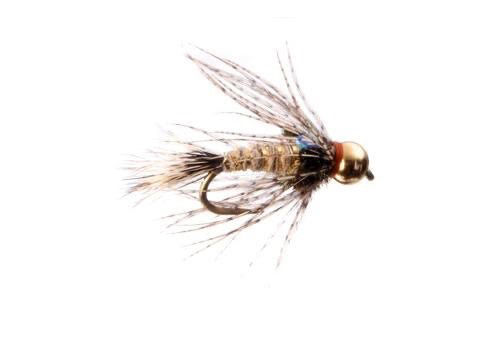
3. Guide’s Choice Hare’s Ear
Tan — Size 16-14
Some flies never go out of style because they simply catch fish everywhere.
The Guide’s Choice Hare’s Ear is one of those flies.
During May, trout are feeding opportunistically. Water clarity changes daily, insect activity fluctuates constantly, and fish want versatile food options. The tan Hare’s Ear checks every box.
It can imitate:
Mayfly nymphs
Caddis pupa
Small stoneflies
General drifting food
Matt often fishes this pattern as the second fly behind a larger Pat’s Rubber Legs. The bigger fly gets attention and helps the rig sink quickly, while the Hare’s Ear cleans up fish feeding on smaller natural insects.
Why this fly shines in runoff:
Natural buggy appearance
Works in both clear and stained water
Deadly under indicators
Extremely versatile
Pro Tip from Matt Fletcher:
During runoff, depth matters more than almost anything else. Add enough weight to occasionally tick bottom. If you’re never touching structure, you’re probably drifting above the fish.

Bonus Streamer
Kreelex Minnow — Copper/Gold Size 4
When rivers begin rising and visibility drops, streamer fishing can become absolutely electric.
The Kreelex Minnow in Copper/Gold is one of Matt’s favorite patterns for targeting aggressive trout during runoff conditions. As water gains color, predatory fish rely heavily on vibration, flash, and movement.
This streamer checks all three boxes.
Fish it:
Along banks
Behind structure
Near flooded grass
Through slower side seams
The flash helps trout locate the fly in stained water, while the profile creates strong contrast.
Pro Tip from Matt Fletcher:
Slow your streamer presentation down during cold runoff conditions. Many anglers strip too aggressively. Let the fly swing, pause, and hover naturally through softer water where trout are conserving energy.

How to Fish Runoff Conditions Successfully
Runoff fishing is less about fighting the river and more about understanding where trout relocate when flows increase.
Here are Matt Fletcher’s top runoff strategies:

1. Fish the Edges
Trout hate burning unnecessary energy. As flows rise, they move toward slower water:
Inside bends
Banks
Soft seams
Eddies
Behind structure
Forget the middle of the river. Focus on soft water near the edges.

2. Don’t Be Afraid of Dirty Water
Slightly stained water is often ideal.
A little color gives trout confidence and allows anglers to get closer without spooking fish. If visibility is around 1-2 feet, fishing can still be phenomenal.

3. Use Bigger Flies
Runoff dislodges large food items. Stoneflies, worms, sculpins, and baitfish become major food sources.
This is why patterns like:
Pat’s Rubber Legs
Streamers
Worms
Larger attractor nymphs
become so effective.

4. Adjust Weight Constantly
Depth changes throughout the day during runoff.
Guides constantly modify:
Split shot
Indicator depth
Fly size
Rig spacing
If you stop adjusting, you stop catching.

5. Fish During Stable Flow Windows
Early morning can sometimes be tougher during heavy snowmelt. As temperatures stabilize, fish often become more active.
Pay attention to:
Overnight temperatures
Snowmelt spikes
Afternoon clarity changes
Consistency matters more than perfect clarity.

Book a Trip with Matt Fletcher & the CRO Guide Team
Whether you’re learning runoff tactics for the first time or looking to dial in your spring game, spending a day on the water with an experienced guide can completely change how you approach May fishing.
The CRO guide team spends every day adapting to changing conditions so you don’t have to guess.
From technical dry fly fishing to aggressive runoff streamer eats, May offers incredible opportunities for anglers willing to fish smart.
Now is the time to get on the calendar before prime summer dates disappear!
📞 970-236-1937
Watch Our Latest YouTube Videos
We just dropped new tying videos featuring:
Hilbert’s Sexi Caddis Larvae
Hilbert’s Sexi Caddis Pupa
These patterns have become staples for our guides throughout spring and early summer, and the tutorials break down exactly how we tie them for maximum effectiveness on the water.
Stay tuned for more fly tying tutorials, river reports, and on-the-water tactics from the CRO crew all season long.
Thanks for tuning in!
-The CRO Team


Comments